
News and Event Highlights
News and Event Highlights
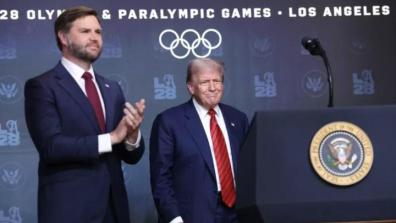
IGP Affiliated Faculty Member Robert Y. Shapiro told Newsweek: "This is very plausible. Historically in the US, we have had Vice Presidents being the obvious candidate once incumbents presidents have served their terms, or sometime later."
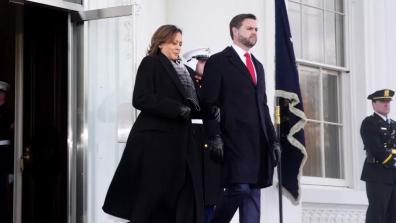
Columbia SIPA professor and IGP Affiliated Faculty member Robert Y. Shapiro to Newsweek: "The Democratic primary polling is much too early and all we are seeing is name recognition for past presidential candidates and ones in the news lately in a visible way."
ROOST, a non-profit organization incubated at SIPA’s Institute of Global Politics, is dedicated to building scalable, resilient, and open-source safety tools for the AI era.

When a foreign competitor gains an unexpected technological capability, it can precipitate conflict, writes senior research scholar Julian Gewirtz.
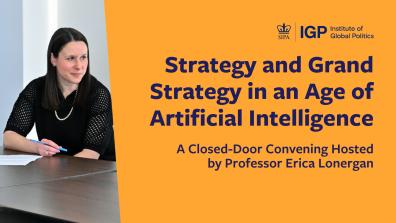
The Institute for Global Politics (IGP) at Columbia University’s School of International and Public Affairs (SIPA) convened an intimate group of leading experts for a closed-door convening to tackle cutting-edge academic and policy questions regarding the implications of Artificial Intelligence (AI) for strategy and grand strategy.
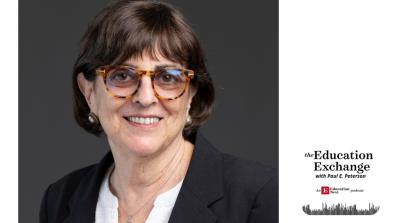
Ester Fuchs, Columbia SIPA professor and IGP Affiliated Faculty member, joins Paul E. Peterson to discuss the New York City mayoral race and what it could mean for education in the city.
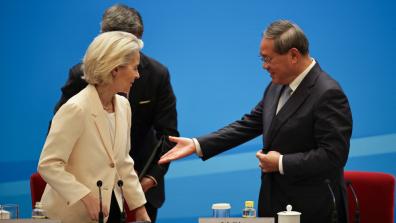
Beijing thinks it holds all the cards as Trump attacks allies, writes senior research scholar Julian Gewirtz.
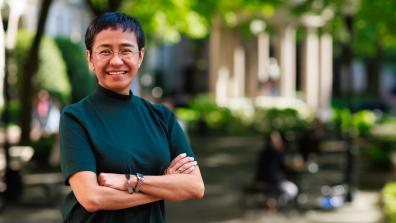
Maria Ressa — professor of professional practice at Columbia SIPA and IGP Faculty Advisory Board member — discusses her work “to safeguard freedom of expression, which is a precondition for democracy and lasting peace.”

IGP Carnegie Distinguished Fellow Wally Adeyemo, who was a key architect of Russia sanctions in the Biden administration, said Trump should move quickly to take advantage of relatively low global oil prices and ramp up economic pressure on China for its support of Moscow’s war in Ukraine.
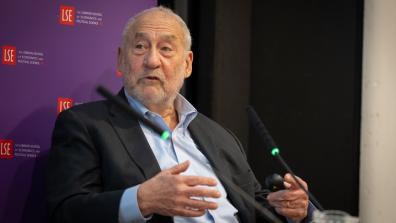
In The Origins of Inequality, and Policies to Contain It, Joseph Stiglitz draws writings from across his five-decade-long career into a broad analytical framework that describes what causes and perpetuates inequality.